
Exfiltration Group Website

Project Overview
This project was a collaborative effort to create an interactive website that educates users about phishing attacks and how to protect themselves. The website features a variety of educational resources, including interactive quizzes that test users' knowledge of phishing tactics.
Phishing is a prevalent cyberattack that can affect individuals and organizations alike. Alongside 4 colleagues, we created this website to educate users about the risks and provide them with the knowledge to protect themselves.
What is Phishing?
Phishing is a cyberattack that involves tricking users into providing sensitive information, such as usernames, passwords, and credit card details, by masquerading as a trustworthy entity in an electronic communication. We have further information detailing the different types of phishing attacks and how to recognize and avoid them on the website. You can find a link to it in my Resume.
Website Design
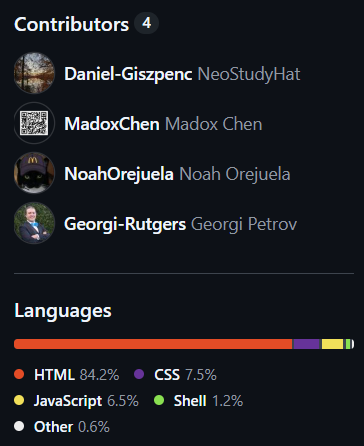
We designed a modular, lightweight static site architecture to ensure minimal attack surface and fast web performance. We accomplished this by using HTML, CSS, and JavaScript directly to create the website, rather than using a CMS or framework. This allowed us to have full control over the code and keep everything simple and understandable as we learned how to develop and deploy web applications.
In our development, we leveraged interactive AI tooling to accelerate development of interactive activities, practical examples, animations. Specifically, we used Claude to help us understand how to implement our interactive quiz, and ChatGPT to assist in color combination options and the Rick Roll demonstration.
Content and Research
When we first started researching, we decided we want to focus on how Phishing is evolving. We decided to focus on the impact of AI on phishing and how it's changing the landscape of cyber threats.
We wanted to also make our site educational and accessible to a wide audience. We aimed to create content that would be easy to understand and provide practical value to users. We also wanted to focus on low-technical literacy users, ensuring that the information was presented in a way that was easy to digest and apply.
My primary role in the research was to identify and analyze the most relevant and up-to-date information on AI-driven phishing techniques. I also contributed to the development of the site's content and structure, ensuring that it was both informative and engaging for our target audience.
My priority was to teach users to protect themselves, and to increase overall awareness of phishing and social engineering attacks. Even if it just made them think a bit more before doing something online, regardless if most still eventually fall for it, would help deter some attacks and harm in the long run.


